How long can the clutch plates of a car last? How do I know if it's time to change?
In the power transmission system of automobiles, clutch plates play a crucial role, especially for manual transmission vehicles. It is like a messenger between the engine and the gearbox, responsible for accurately and smoothly transmitting the power generated by the engine to the gearbox, and then driving the wheels to roll forward. However, this critical component is quite delicate and can be easily damaged if used improperly. Today, let's delve into the matter of car clutch plates.
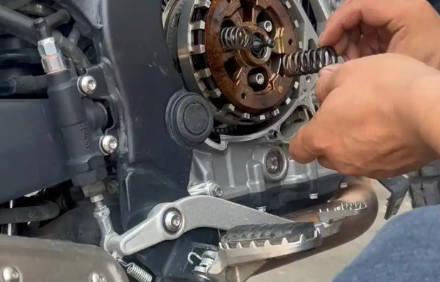 1¡¢ Differences in clutch disc lifespan factors
The service life of clutch plates is not a fixed value, and it can vary greatly among different vehicles and drivers.
From the perspective of drivers, novice drivers often lack driving experience and are not proficient enough in controlling the clutch pedal. When starting, the clutch is released too quickly or too slowly, and the semi clutch state is not maintained properly, frequently hovering near the semi clutch point, causing excessive friction between the clutch plate and the flywheel. For some beginners, the clutch plates may "end up dead" after only 50-60000 kilometers. With rich experience, experienced drivers can accurately grasp the timing of clutch engagement and disengagement, and handle operations such as starting and shifting with ease. When they drive, most of the clutch plates can withstand more than 200000 kilometers.
2¡¢ How to determine if the clutch plate needs to be replaced
When the clutch plate wears out to a certain extent, the vehicle will emit various "distress signals" to remind the owner that it should be replaced.
Firstly, the most intuitive feeling is the phenomenon of slipping. When you accelerate rapidly, such as in overtaking situations, if the engine speed rapidly increases while the speed slowly increases, it is likely that the clutch plate is "slipping". When driving normally and shifting into second or third gear, stepping down the accelerator pedal with a large foot, the engine speed and vehicle speed cannot be synchronized and matched, the speed increases abnormally, and the vehicle speed lags behind, which is also a typical manifestation of clutch slip. Alternatively, when driving out of an underground parking lot and climbing a slope, the vehicle may have increased the throttle more than before, but the power is noticeably insufficient, giving the feeling that the car is struggling. This is likely due to severe wear on the clutch plates, which cannot effectively transmit power and cause slippage.
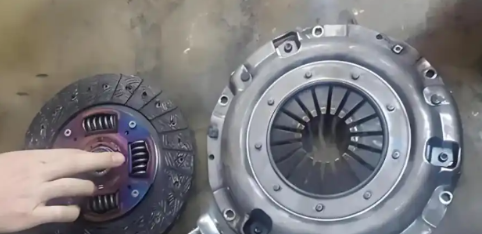 3¡¢ Driving operation skills reduce wear and tear
It is crucial to understand the factors affecting the lifespan of clutch plates and replacement signals, and master the correct driving operation skills to reduce wear and tear.
On congested roads, try to minimize unnecessary starting operations, maintain an appropriate distance when following vehicles, and avoid frequent starting and stopping. When starting, it is best to control the throttle below 1500 revolutions per minute. Do not press the accelerator pedal too hard. The common technique used by experienced drivers is to slowly release the clutch pedal while gently adding fuel, keeping the engine speed at a low level in the semi clutch state until the clutch is completely released. Then, according to the road conditions, step on the accelerator pedal reasonably to minimize the wear of the clutch plates.
In short, understanding the knowledge of car clutch plates can not only extend their service life, but also timely detect problems, ensuring driving safety and smoothness. I hope all car owners can apply what they have learned, so that the "heart" and "limbs" of their cars can work together more harmoniously.